
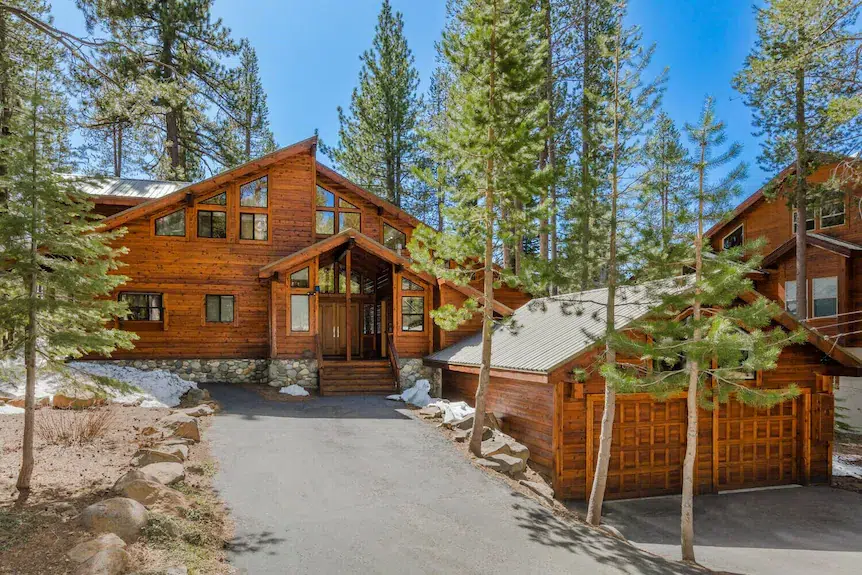
If you own a home in Truckee, Tahoe Donner, or the greater North Lake Tahoe region, you will eventually notice something that makes you pause. A crack in drywall. A patio that feels slightly uneven. A driveway that suddenly has a new line running through it. A door that sticks when it used to close cleanly.
The good news is that not every crack means a serious problem. The tricky part is knowing what is normal for a mountain home, and what is a sign that water, soil, and seasonal freeze-thaw cycles are pushing things out of place.
The big idea: water is usually the driver
- Soften and weaken soil
- Create erosion channels on slopes
- Increase pressure against hard surfaces
- Set up freeze-thaw movement in winter
Even in summer, the way your home handles water sets you up for what happens during fall storms and winter cycles.
Freeze-thaw in the Sierra, the slow pressure test
- Heaving in walkways and patios
- Movement in steps and landings
- Small separations at trim lines
- Cracking in asphalt and concrete
The key is not just cold weather. It is moisture plus cold, repeated over time.
Soil movement, why two homes on the same street can behave differently
- Compact over time, especially under newer fill areas
- Expand when wet and shrink when dry
- Erode when runoff concentrates in one path
- Shift more on steeper lots or where drainage is poorly controlled
That is why it helps to think less about “cracks” and more about “patterns.” Where is the water going, and where is the ground being asked to handle more than it should.
Common signs homeowners notice, and what they can mean
Hairline drywall cracks
Stair-step cracks on exterior surfaces
Doors and windows that stick
Uneven patios, pavers, or walkways
Driveway cracks and sinking edges
What deserves attention is rapid spreading, sinking edges, pooling water, or cracks that look like they are following a low spot where water sits.
What is “normal settling” vs what deserves attention
Often normal
- Small, stable hairline cracks
- Minor seasonal sticking that resolves
- Tiny separations at trim that do not change
- A single crack that does not grow or spread
Worth evaluating
- Cracks that grow quickly or reappear after patching
- New gaps between steps and landings
- Noticeable slope changes or trip hazards
- Water pooling near the foundation
- Downspouts dumping water right at the base of the home
- Erosion channels forming on the downhill side of the property
If you are not sure, the best approach is to document and watch for change.
The homeowner checklist: what you can do now (without guessing)
1) Track changes with photos
2) Follow the water during a storm
- Where is water dripping off the roofline
- Where is it pooling
- Where is it carving channels
- Where does it hit the ground with force
3) Check downspout discharge
4) Look for soft zones and repeat wet spots
That is where problems often start.
When to take action (timing matters in Tahoe)
If you wait until winter, small issues can become harder to diagnose and more expensive to address.
FAQ: quick answers for Tahoe homeowners
Should I panic when I see a crack
Why does this show up in summer
What is the most common root cause
UNSURE ABOUT POTENTIAL ISSUES ON YOUR PROPERTY?
A quick, experienced look can help you understand what you’re seeing and what to do next. If you want help evaluating cracks, settling, or water flow around your home, reach out to our team today!