
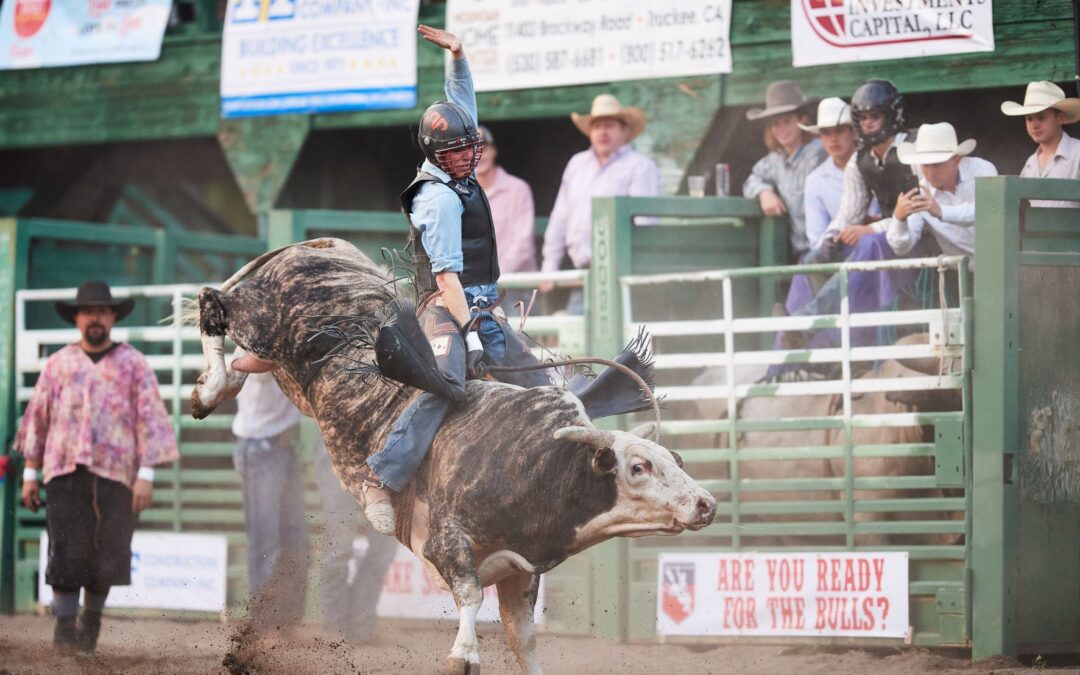
The first Truckee Pro Rodeo was held in 1975, and today this high-energy weekend, with dust in the air, grandstands full, and a crowd that includes both locals and visitors. But the rodeo is not just a summer event that happens to be hosted in Truckee.
It makes sense here because Truckee’s early growth was tied to working landscapes and working people, ranching, horses, freight, and the railroad. The modern Truckee Rodeo is one of the clearest reminders that long before Truckee was a recreation hub, it was a place built around movement, labor, and the practical realities of living in the Sierra.
Why Truckee became a “cowboy town” in the first place
When people think of “cowboy history,” they often picture wide-open deserts or the Great Plains. The Sierra does not always come to mind. But mountain towns like Truckee developed their own version of Western working culture, shaped by terrain, seasons, and the industries that could actually survive here.
1) Ranching and the working landscape around Truckee
Long before modern tourism, the Truckee area was surrounded by land used for grazing, hay, and seasonal ranch work. Ranching in mountain country is not just about cattle; it is about timing, weather windows, access routes, and animals that need to be moved, fed, and managed across big distances.
That kind of work depends on horsemanship and practical skills. It also creates a culture where community gatherings often revolve around shared labor, shared seasons, and shared traditions.
2) The railroad, the reason Truckee grew fast
If ranching helped shape the skills and culture, the railroad helped shape the town.
How rodeos fit into Western towns, and why they stuck
- Celebrate local working culture and horsemanship
- Gather the community during a busy season
- Create a tradition that could be passed down
- Raise funds and support local groups (in many towns, this became a major purpose)
That pattern is part of why rodeos tend to be deeply rooted in place. When a rodeo lasts for generations, it is usually because it is tied to local identity, not because it is a random attraction.
The Truckee Rodeo as a living link to the town’s working past
The Truckee Rodeo is often described as one of the classic summer events in the region, but what makes it meaningful is that it connects modern Truckee to an older version of itself.
Even as Truckee evolved into a destination town, the rodeo remained a visible thread to the era when the local economy was built on industries like ranching and rail. It is a reminder that Truckee’s “summer crowd” is not the first wave of people to move through this corridor; it is simply the newest version.
A quick timeline: ranching, rail, and why August makes sense
- Working landscapes first: Grazing, hay, and seasonal ranch work shaped the region’s early rhythms and skills.
- Railroad era growth: The railroad helped Truckee grow into a hub for movement, freight, and labor.
- Community traditions form: Western skills and culture become organized into public events and competitions.
- Modern Truckee expands: Recreation and tourism grow, but older traditions remain part of local identity.
- Today: The Truckee Rodeo continues as both entertainment and a cultural anchor.
First-timer guide: what you are actually watching at the rodeo
If you have never been, rodeos can feel fast and confusing. Here are a few basics that make it more fun to watch:
Roughstock events (the “hang on” events)
- Bareback riding: Rider holds a rigging, no saddle, high intensity and very physical.
- Saddle bronc riding: More rhythm and form, still powerful, but often described as the “classic” rodeo style.
- Bull riding: Short, explosive, and unpredictable, one of the most famous events.
Timed events (the “precision” events)
- Barrel racing: Fast turns around barrels; one small mistake can cost the run.
- Roping events: Skills that come directly from ranch work; timing, accuracy, and coordination matter.
Why this history still matters to Truckee now
KEEP YOUR BOOTS POLISHED & LET US HANDLE THE DIRTY WORK!
Rodeo weekend often overlaps with peak summer use in Truckee. If you’re hosting friends or family, let our team handle the to-do list so you can focus on the fun. We can help with quick deck and stair fixes, exterior touch-ups, and cleanup that makes your place feel ready for guests.