
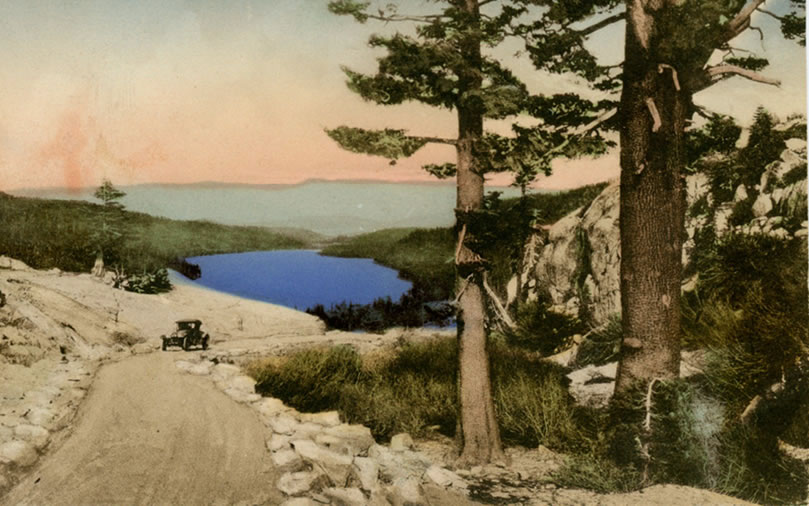
Every summer, Truckee fills with visitors heading to Donner Lake, driving over Donner Pass, or using the area as a base for North Lake Tahoe. It can feel like a modern phenomenon, but the truth is that this corridor has been pulling people through the Sierra for generations.
The reasons have changed, but the fundamentals have not. Geography created a gateway, and once people found a reliable way through it, the route became a pipeline for commerce, migration, and eventually, recreation.
A route shaped by terrain, then by technology
The Sierra Nevada has never been easy to cross. For centuries, movement through the mountains depended on a few workable corridors, places where elevation, grade, and seasonal conditions made passage possible. Donner Pass became one of those key crossings because it offered a practical line through the crest, especially compared to steeper, less predictable alternatives.
That “practical line” mattered long before summer vacation traffic. It shaped where people traveled, where supplies moved, and where settlements grew. Truckee developed in a place that connected movement and commerce, not by accident, but because it sat near a corridor that people kept returning to.
Then came the infrastructure that locked the route into place.
In the 1860s, the First Transcontinental Railroad pushed through the Sierra, and the Donner Pass route became nationally significant. The railroad did not just carry goods; it also carried people, making travel to the mountains more accessible. Later, highways followed similar logic, and the corridor became even more central to travel between California and points east.
In other words, the “magnet” was not just the lake or the views. It was a combination of a workable pass and the transportation systems that turned a hard crossing into a repeatable trip.
Donner Lake, a stop that became a destination
Donner Lake sits right where a traveler wants it, close to the pass, close to Truckee, and surrounded by terrain that feels dramatic without being remote. For early travelers, a lake like this was a natural pause point. Water, rest, and a sense of arrival after a demanding stretch of mountain travel.
Over time, that stop became something else. As rail and road travel improved, the lake shifted from being a waypoint to being the reason to come in the first place.
By the early 20th century, mountain recreation was becoming part of American life. People started seeking out cooler summer temperatures, fresh air, and outdoor activities. Truckee and Donner Lake fit the bill. The same corridor that once served migration and commerce began serving leisure.
The “summer travel magnet” we recognize today
Fast forward to now, and the motivations are more fun, but they still trace back to the same foundation. People come for:
- Lake days at Donner
- Hiking, biking, and trail access
- Family weekends and holiday events
- Classic Truckee summer traditions (parades, community gatherings, and long evenings outside)
The landscape is still doing what it has always done. It funnels people through a natural gateway, then gives them a reason to slow down and stay.
Then and now, summer travel leaves a footprint – Estimated Visitor Volumes
Although no agency publishes an exact Truckee count, weekend Estimated Visitors to the Truckee-Tahoe Region, tourism agencies estimate that on large summer weekends, the region sees approximately:
- Memorial Day 150,000–200,000
- Fourth of July 250,000–350,000+
- Labor Day 180,000–250,000
More Work For Us = More Summer For You!
More summer use usually means more wear on decks, stairs, driveways, and exterior finishes, especially for homes that host guests.
If you want help with summer projects, Elements Mountain Company can assist with deck repair and renovations, paint and stain, defensible space, and tree service.