
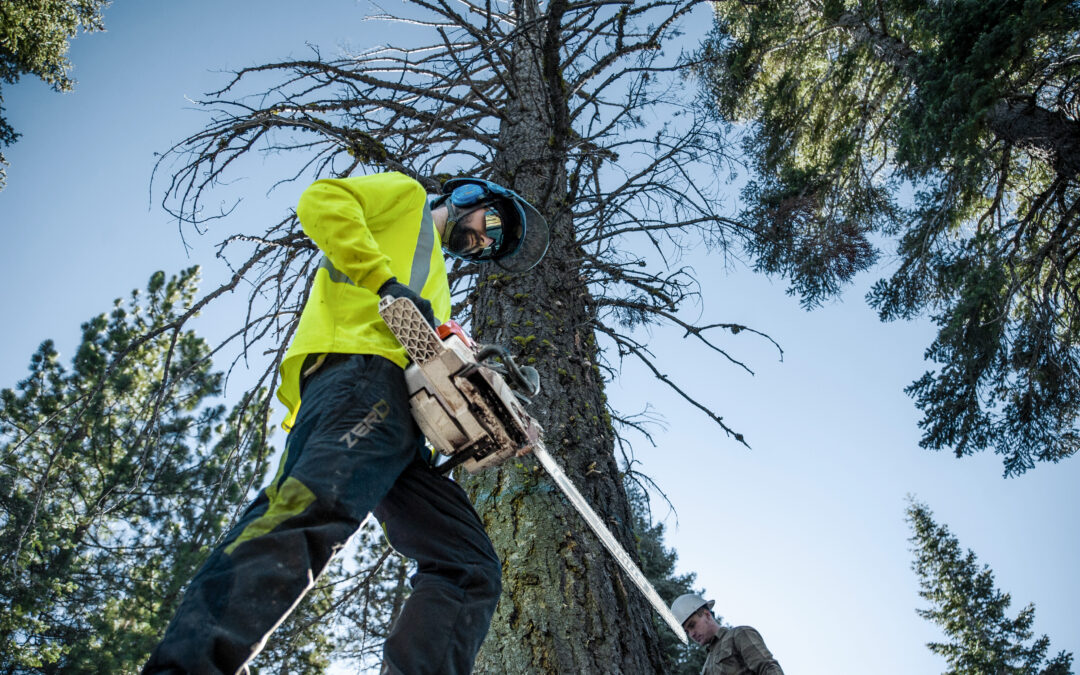
In Truckee and Tahoe Donner, March is when winter starts to loosen its grip, and homeowners start looking ahead. The days get longer, the snow begins to settle, and the to-do list for spring shows up fast.
If defensible space and tree service are on your list this year, March is a smart time to plan. It is early enough to get ahead of the rush, and it is also when winter damage becomes easier to spot.
What defensible space includes (and why it matters here)
Defensible space is not one single task. It is a set of practical steps that reduce wildfire risk and improve access around your home. In mountain communities, it also helps your property handle wind events, heavy snow years, and dry summer conditions.
Typical defensible space work can include:
- Limb-up: removing lower branches so fire has less opportunity to climb into the canopy
- Deadwood removal: clearing dead, dying, or downed material that can ignite easily
- Clearance zones: reducing dense vegetation near structures, decks, and access routes
- Targeted thinning: spacing trees and shrubs to reduce fuel continuity
- Cleanup and haul-off: removing debris so it does not become a dry-season hazard
Hyperlink suggestion:
- [LINK: Defensible space and tree service]
What our crews often see in March: common tree hazards after winter
March is a transition month. Snow load, wind, and freeze-thaw cycles leave clues behind.
Common March tree issues in Truckee and Tahoe Donner:
- Snow-loaded limb cracks: branches that bent under weight, then split as temperatures changed
- Hangers: broken limbs caught in the canopy that can drop later, often during wind
- Leaning or shifted trees: root plates that moved in saturated ground or heavy snow
- Driveway and roof overhang hazards: limbs that now sit lower than they did in fall
- Storm debris buildup: downed branches that become dry fuel later in the season
If you notice fresh splits, heavy overhang, or anything that could fall onto a roof, deck, or driveway, it is worth addressing early.
Schedule now vs. scramble later: a simple planning timeline
You do not need to do everything at once, but you do want a plan that matches the local season.
March and early April: assess, prioritize, and get on the schedule
- Identify hazards and deadwood
- Plan limb-up and thinning areas
- Book work before peak demand
Late April through June: complete defensible space work before summer conditions build
- Finish clearance zones and cleanup
- Remove debris and haul-off
- Reduce fuel continuity around structures and access routes
Summer: maintain and monitor
- Keep needles and debris from accumulating near decks and structures
- Watch for new deadwood after wind events
- Stay current on any local guidance and restrictions
The biggest advantage of March planning is simple. You get better scheduling options, and you avoid the last-minute rush when everyone is trying to book the same work window.
Bundle smart spring projects while crews are already on site
If you are planning exterior improvements this spring, it can be efficient to line up projects together, especially once the snow is mostly gone and access is easier.
Optional spring add-ons to consider:
Ready to get on the books?
March is booking season for a reason. Mountain living rewards preparation, and the homeowners who plan early tend to have the smoothest spring.